How to Approach Property Management Companies for Landscaping Work
July 31, 2026
Updated July 31, 2026
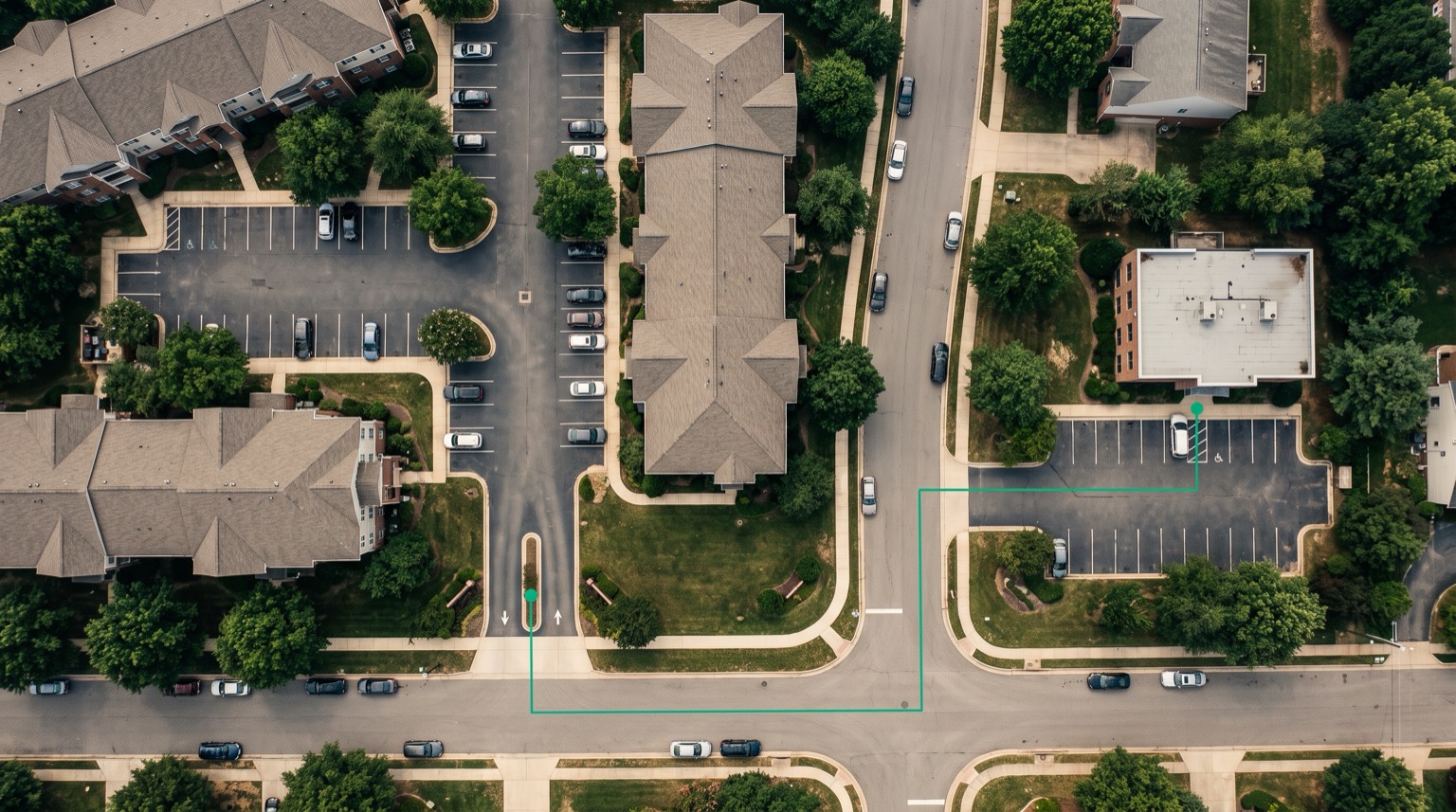
The reliable way to approach a property management company for landscaping work starts with the exact property. Resolve how that property is managed, then contact the party that appears to control its grounds contract with a property-specific reason to reply.
That work is not easy. The name on a monument sign may differ from the owner in public records, the management company shown online, and the office that handles vendor inquiries. Treat each connection as something to verify instead of assuming a company directory has already found the signer.
Start with the property, not a company directory
A company directory asks, "Who works at this business?" Your actual question is narrower: "Which organization controls the landscaping path for this property?"
Those questions can lead to different places. An apartment complex may trade under a community name while a separate entity owns it and a local management company runs it. An HOA may control common-area landscaping through the association, a management company, or an established board process. An office park may have several tenant businesses whose staff have no connection to the grounds contract.
Start a property record before opening a people database. Capture:
- the street address and property type
- the name visible on the site, map listing, or official website
- the owner or association shown in a relevant public record
- any published management relationship
- the source and date behind each detail
- a status of verified, inferred, or unknown
This keeps a plausible clue from quietly becoming a false fact. It also protects the broader commercial landscaping contract process from turning into another list of companies that may have no authority over the properties you want.
Work out how the property is actually managed
The same property type can have very different control paths. Use the property website, association materials, public ownership records, management-company portfolio pages, and the property's own published contact channels to build a hypothesis. Then verify the relationship through a second source or direct confirmation when possible.
Do not assume the owner handles grounds work directly. Do not assume the on-site office awards the contract. Do not assume a corporate brand controls every local vendor decision. Record what the evidence supports and leave the rest unknown.
| Property path | What the clue may indicate | Useful next check | What not to assume |
|---|---|---|---|
| Corporate office | A larger company owns, manages, or brands the property | Confirm the exact property appears in its portfolio or published materials | The main office handles local grounds contracts |
| Local management company | A nearby firm is publicly tied to the property | Check the firm's property page, vendor information, or published contact route | Every property in its portfolio follows the same process |
| On-site office | The property has a local point of contact | Ask which channel handles grounds-maintenance vendors | The front desk can approve or replace a vendor |
| Self-managed property | The owner or association appears to manage the site without a separate firm | Confirm the published association or ownership contact path | One visible person controls the contract alone |
The goal is not to force every property into one pattern. It is to identify the most defensible path for this address and know which part still needs confirmation.
Find the contact path tied to that property
Once you have a management hypothesis, look for the route the organization itself publishes. That may be a property contact form, a vendor portal, a local office number, an association channel, or a general inbox that can confirm where grounds vendors belong.
This is where contact discovery often slows down. A management relationship may be visible while the vendor route is not. A general office may confirm the right process without naming the person who controls it. That is still useful progress because it replaces a blind pitch with a verified next step.
Use a four-step property-to-contact workflow:
- Anchor the account. Record the exact address, property type, visible identity, and why it fits your route. Mark each field verified, inferred, or unknown.
- Resolve the control path. Connect the property to an owner, association, or management company using sources that actually name the property.
- Verify the intake route. Find or confirm the published channel for landscaping vendors, grounds maintenance, procurement, or property inquiries.
- Make and log the first contact. Send a note tied to the property, record the response or silence, and preserve unresolved questions for follow-up.
Do not promote an inferred relationship to verified just because it looks likely. If the contact route remains unknown, the next action is confirmation, not a walkthrough.
Make the first message specific enough to matter
The first message does not need to contain a full proposal. It needs to show that you are contacting the organization for a reason connected to one property.
A useful first note can cover four points:
- the exact property you are asking about
- the commercial grounds service your crew provides
- the local reason the account fits your service area
- one simple question about the correct vendor or contract path
For example:
I am reaching out about the grounds maintenance at Oak Ridge Office Park on Westview Road. We provide recurring commercial landscape maintenance in that area and are mapping properties that fit our existing route. Does your office manage the landscaping vendor process for that property, or is there another published channel I should use?
The example uses a fictional property name. It makes no claim about the current vendor, contract timing, budget, or condition of the grounds. Those are unknown until the property confirms them.
If the response points you to a vendor intake process, follow that process. If it earns a real conversation or walkthrough, the next question changes from finding the route to proving you will be a dependable vendor.
Treat walk-ins as one tactic, not the system
A local visit can help when you already know the property accepts vendor materials on site or you are confirming a published contact path. It becomes wasteful when the visit is the research method.
The on-site office may serve residents, tenants, or visitors rather than manage the landscaping agreement. The relevant management company may be elsewhere. The property may use a formal vendor process that cannot be bypassed at the front desk. If it does, follow the applicable route instead of treating registration as an award. The guide to commercial landscaping bid lists separates management-company intake from public portals, contractor prequalification, and direct invitations. If the route leads to onboarding, confirm the buyer's commercial landscaping insurance and vendor requirements before sending a generic packet.
Treat a walk-in as a deliberate step with a defined purpose:
- confirm a property detail that could not be verified remotely
- leave requested materials through an accepted channel
- attend a scheduled conversation or walkthrough
Without one of those reasons, keep resolving the property from your desk. Driving to every attractive site before you know its control path turns uncertainty into truck time.
What this looks like on a real property
Consider an apartment complex with a community name on the entrance sign. Its website uses the same name, but the footer identifies a regional management company. A public ownership record shows a separate legal entity.
None of those clues alone proves who can change the grounds contract.
Your working record might look like this:
| Detail | Status | Reason |
|---|---|---|
| Apartment complex address and community name | Verified | The property website and map listing match |
| Regional company manages the complex | Verified | The property website names the management company |
| Ownership entity | Verified | The applicable public property record lists it |
| Management company controls landscaping intake | Inferred | Management is confirmed, but the vendor route is not |
| Contract timing and incumbent status | Unknown | No property source or direct confirmation supports either claim |
The next move is not to ask the leasing office for a bid on the spot. It is to use the management company's published channel and ask whether it handles grounds-maintenance vendors for that exact complex.
If the answer is yes, you have a verified route. If the answer redirects you, update the record. If there is no response, schedule a measured follow-up instead of pretending the first hypothesis was correct.
Build a repeatable account-to-signer workflow
One property can take real work to untangle. The advantage comes from using the same evidence standard across every suitable HOA, apartment complex, office park, shopping center, or medical facility in your service area.
Keep the operating record simple:
- property and route-fit notes
- management and ownership sources
- control-path status
- published contact route
- first message and follow-up date
- response, redirection, or remaining unknown
Over time, this shows which property paths lead to usable conversations and which consume research without producing a verified route. It also gives every outreach attempt a clear next action instead of leaving names scattered across browser tabs.
If you want to start with the properties before researching each management path, map the commercial accounts in your service area. Use that shortlist to decide which addresses deserve the account-to-signer work first.