What Facility Managers Actually Look For Before Adding a New Vendor
July 8, 2026
Updated July 8, 2026
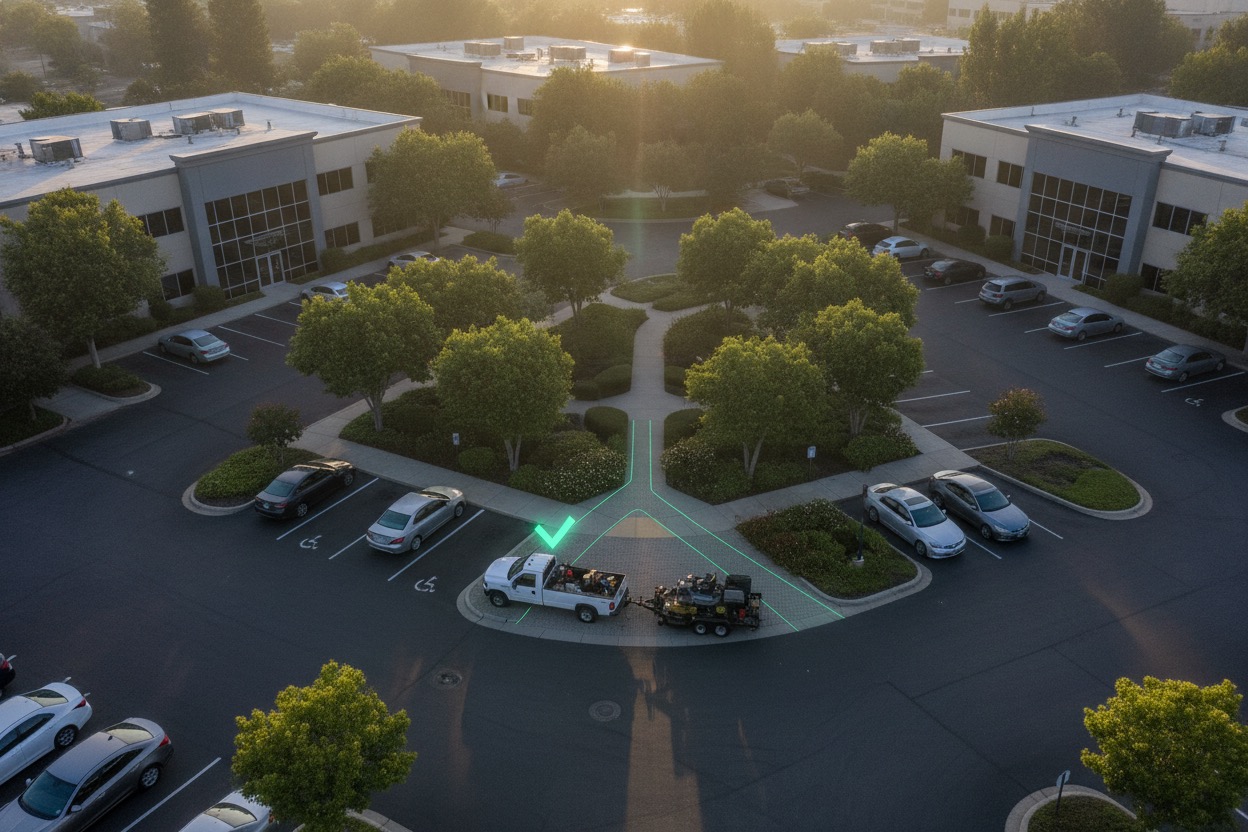
Getting the walkthrough is hard. Losing the account anyway, after you finally earned one, is the part nobody warns you about.
Most crews spend their energy on the first contact and assume the rest follows from good work. Facility managers who actually decide who gets called back tell a different story. The trade skill is rarely the deciding factor. What happens around the job is.
The first contact decides more than the pitch
Facility managers manage a building, not a sales pipeline. An unannounced visit asking for a meeting reads as an interruption, not an introduction. The pattern that actually works is quieter: drop a vendor packet with the front desk, then follow up on a schedule that respects their time.
That is not a small distinction. A facility manager fielding walk-ins all week has no reason to remember the one who showed up unscheduled. The vendor who left a clean packet and followed up predictably is the one still in the folder next quarter.
Purchasing departments are worth knowing about too. On properties large enough to have one, it can be an easier way in than the facility manager directly, since the FM is often too stretched to take a cold call or a drop-in.
Paperwork readiness is a filter, not a formality
Every facility manager conversation on this eventually lands on the same short list before real work gets discussed:
- proof of insurance and a certificate of insurance ready to send, not promised
- a W9 ready before it is requested
- an itemized quote broken into labor and materials, not one lump number
- the ability to take a card for small jobs under the property's non-bid threshold
None of this is about price. It is about whether working with you creates more friction for the person who has to sign off, or less. Properties that farm out small jobs without a full bid process (commonly anything under roughly $1,000, sometimes higher) tend to hand that work to the one or two vendors who already made this easy.
Communication outweighs craft
Ask a facility manager what separates the vendor who gets called every week from the one who gets phased out, and the answer is rarely about the work itself.
It is proactive updates instead of silence. It is flagging a problem before it becomes their problem. It is not disappearing after the invoice goes out. Vendors who treat the relationship as a partnership, not a transaction, get the next call. Vendors who go quiet the moment the check clears do not.
This is where a lot of good crews lose ground they already earned. The work was fine. The account still slipped, because nobody heard from the vendor between visits.
What gets you added, and what gets you cut
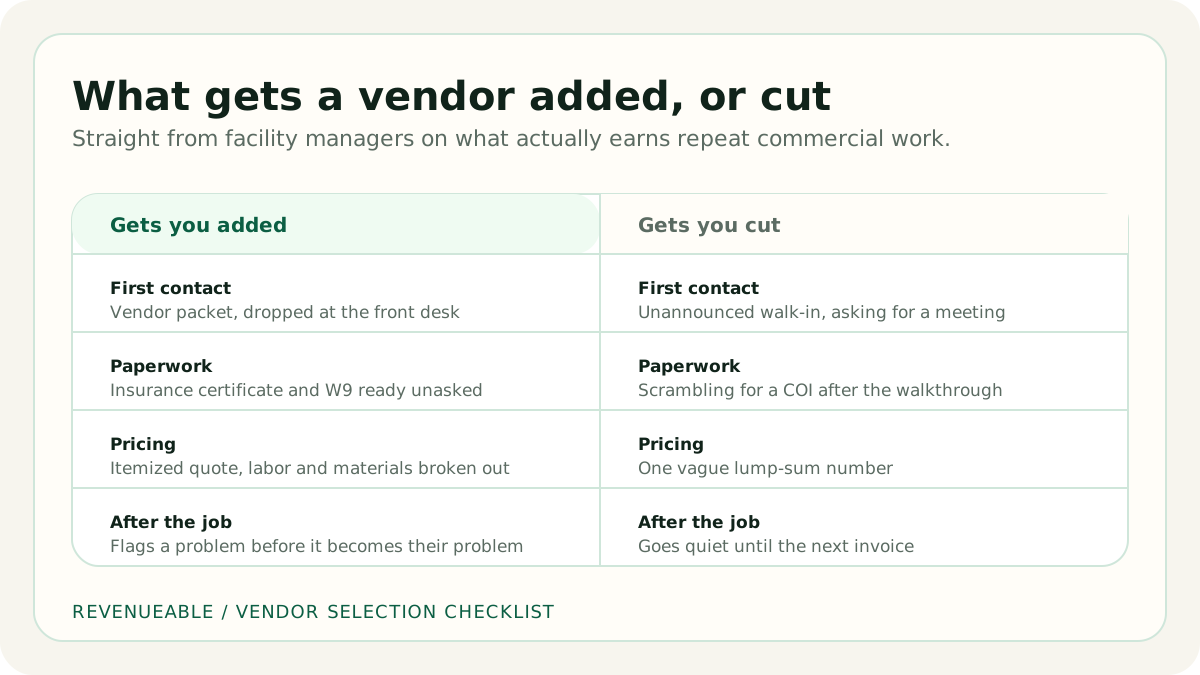
Put plainly, side by side:
| Moment | Gets you added | Gets you cut |
|---|---|---|
| First contact | Vendor packet at the front desk | Unannounced walk-in expecting a meeting |
| Paperwork | Insurance and W9 ready, unasked | Scrambling for a COI after the walkthrough |
| Pricing | Itemized, labor and materials broken out | One vague lump-sum number |
| After the job | Flags issues before they escalate | Goes quiet until the next invoice |
What this looks like on a real property
Take a mid-size office park with two competing landscaping bids on the table. Both crews can do the work. One shows up unannounced, quotes a flat number over the phone, and disappears until the next mow. The other drops a packet with insurance and a W9 already attached, sends an itemized quote after the walkthrough, and flags a drainage issue near the entrance before it becomes a bigger repair.
The second crew is not winning on price. They are winning because the facility manager spends less energy managing them. That is the entire game once you are past the first bid: reduce friction for the person who renews the contract every year.
This is also where knowing which commercial properties are worth targeting in the first place pays off twice. A well-qualified property with a responsive facility manager rewards exactly this kind of vendor behavior. A poorly qualified one will not, no matter how clean your paperwork is.
Build the habit before you need it
None of this requires new sales skill. It requires having your packet, your insurance, your W9, and your itemized quote format ready before the opportunity shows up, so the only thing left to prove is that you follow through.
If you are earlier in the process and still deciding where to spend that effort, start with how to get commercial landscaping contracts without shared leads or cold drop-ins, then come back here once you have a real walkthrough on the calendar.
Ready to stop guessing which properties are worth this level of preparation? Map your territory and build a shortlist around the accounts most likely to reward it.